A Complete Guide to IoT Architecture
Table Of Content

After launching its “Factory of the Future” in collaboration with Bosch, Airbus is using digital intelligence to optimize operations and increase productivity. The energy and utilities sector utilizes large operational infrastructure, sometimes in hazardous conditions where human operators are unsuitable. In these instances, IIoT devices may gather and transmit crucial operational data without the presence of a human operator. For instance, Larsen & Toubro (L&T) is deploying a remotely monitored Green Hydrogen Station in Gujarat, India.
Modern Applications
Physical design knowledge is crucial for selecting suitable devices and sensors, ensuring seamless integration, and optimizing connectivity options in IoT systems. It enables powerefficient strategies, facilitates edge computing, and enhances reliability and resilience through redundancy and failover mechanisms. This knowledge ensures robust, efficient, and reliable IoT ecosystems. Each node device can perform tasks such as remote sensing, actuating, monitoring, etc., by relying on physically connected devices. It may also be capable of transmitting information through different types of wireless or wired connections. While you should strive to reach as near to the edge as is realistically possible to limit the consumption of native computational power, users will need to utilize the cloud for processing that is more in-depth and thorough.
Application/User Interface Layer
IoT’s growth is often hindered by its fragmentation—it’s a difficult task to get so many disparate components of hardware and software to communicate with one another and work together as a whole. The sensors monitoring natural light send the data about the light to the cloud. When the daylight is not enough (according to the previously stated threshold), the control apps send automatic commands to the actuators to switch on the lamps. IoT is the building block of many technological advancements these days. Hence understanding IoT is crucial if you want to create a smart solution. This article gives an overview of the logical and physical design of IoT so that you know what makes the smart solutions we use nowadays.
Wireless Communication Protocols
Smart manufacturing enables greater security, with all IIoT sensors collaborating to monitor employee and workplace safety. Integrated safety systems may safeguard work floors, production lines, and personnel. In the event of an accident, the whole facility may be notified, activities can be halted, and senior management can intercede to address the situation. This incident may also yield useful information that can be used to avoid future occurrences. The industrial internet reference architecture (IIRA) may serve as a reference for developing sophisticated systems in the IIoT domain. In general, the IIRA’s frameworks advocate that businesses design a framework using a systematic approach, which includes feedback and iterations.
Top 4 IoT data privacy issues developers must address - TechTarget
Top 4 IoT data privacy issues developers must address.
Posted: Tue, 22 Feb 2022 08:00:00 GMT [source]
Advanced Materials and Sensors
The request-response protocol between a client and a server is HTTP. The Internet of Things refers to the rapidly growing network of connected objects that can collect and exchange data in real-time using embedded sensors.Cars, lights, refrigerators, and appliances can all be connected to the IoT. This layer is used to control the flow of data segments and handle error control. Also, these layer protocols provide end-to-end message transfer capability independent of the underlying network. Industrial operations are responsible for significant worldwide supplied power, which is detrimental to sustainability and the overall bottom line. Constant monitoring of your system using sensors and gadgets might reveal inefficiencies that lead to waste.
The future of IoT physical design holds the promise of more efficient, smarter, and sustainable devices, making the Internet of Things an integral part of our lives for years to come. In conclusion, the physical design of IoT devices is a dynamic and ever-evolving field. IoT devices are transforming industries, homes, and how we interact with technology. Designing IoT devices with robust security features to protect data and user privacy is a complex challenge. Engineers constantly work on miniaturizing and integrating components to make devices smaller, more energy-efficient, and cost-effective.
Cheat sheet: What is Digital Twin? - IBM
Cheat sheet: What is Digital Twin?.
Posted: Fri, 04 Dec 2020 08:00:00 GMT [source]
These platform networks are often based on hard-wired connectivity services with low latency and technologies such as software-defined-WAN, WAN exchange carrier and direct cloud connections. Often an IoT infrastructure incorporates a bus to link the networks to the first set of analytics and data aggregation platforms. Instead of multiple disparate connections to the aggregation platforms, organizations use a common bus to manage and protect all IoT traffic. As we’ve already talked about, IoT gateways act as doorways for data traveling from edge devices to the IoT platform, typically in the cloud. They cleanse and filter the data, weeding out redundancies and other errors.
Security
Hence, big data is also one of the most enabling technologies in IoT field. IoT is network of interconnected computing devices which are embedded in everyday objects, enabling them to send and receive data. IOT is a system of interrelated things, computing devices, mechanical and digital machines, objects, animals, or people that are provided with unique identifiers. And the ability to transfer the data over a network requiring human-to-human or human-to-computer interaction.
It helps to send commands to an IoT device and receive data from an IoT device over the internet. The biggest benefit of IIoT is its ability to help enterprises automate and thereby maximize operational efficiency. In addition, physical equipment may be linked to software solutions through sensors that continuously monitor performance. This provides enterprises with a greater understanding of the operational efficiency of specific pieces of equipment and whole fleets.
Connectivity should be guaranteed from any devices on any network then only devices in a network can communicate with each other. Over 9 billion ‘Things’ (physical objects) are currently connected to the Internet, as of now. In the near future, this number is expected to rise to a whopping 20 billion. Other clusters include sales enablement, energy management, autonomous vehicles (the fastest-growing cluster), and safety and security. The potential economic value of IoT differs based on settings and usages, with factory settings and human health applications representing outsize shares of this total.
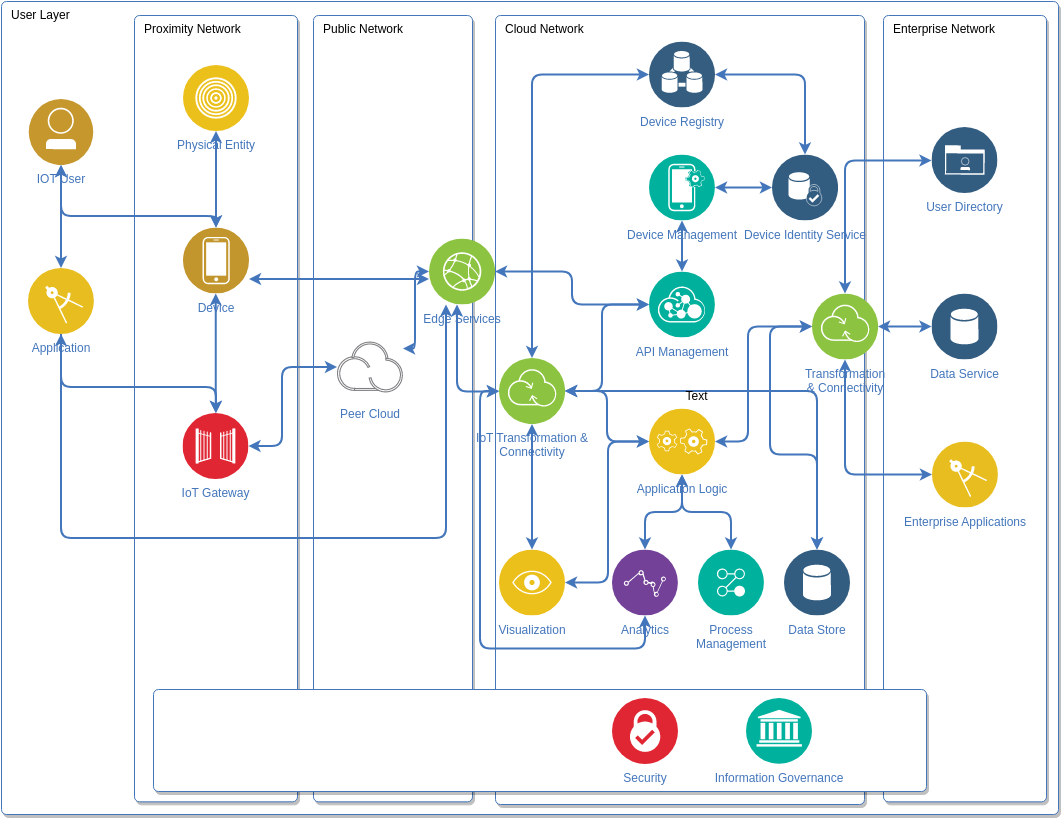
The platform layer provides a window for IoT leaders to view and analyze the data their devices are gathering. Broadly, an IoT platform is a software as a service (SaaS) product that can oversee a fleet of connected things. It performs multiple tasks—hence the word “platform”—and features vary from product to product.


Comments
Post a Comment